
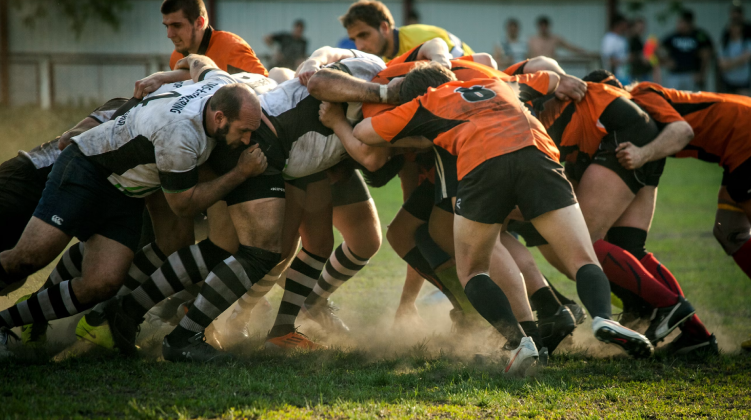
Toulouse Builds Aircraft and Rugby Teams With Equal Seriousness
Fly into Toulouse on a clear afternoon and the runway view tells you everything: rows of half-finished airliners parked wingtip to wingtip, a stadium crowd audible from the tarmac, and a city that treats both as a matter of civic pride. Airbus assembles its jets here. Stade Toulousain, the most decorated club in European rugby, trains a few kilometres away. Neither operation apologises for taking itself seriously.
Thank you for reading this post, don't forget to subscribe!That same appetite for precision shows up off the clock too. After a shift on the assembly line or a training session at Ernest-Wallon, plenty of locals unwind with a phone in hand rather than a remote, and the mobile slot lobby at spinfin is one of the names that keeps coming up in that downtime routine, sitting somewhere between a football highlights reel and an early night.
Where Wings Take Shape
The Airbus final assembly line at Blagnac, just outside Toulouse, is where fuselage sections arriving from Hamburg, Cadiz and Saint-Nazaire become a complete A320 or A350 in roughly eight to twelve days depending on the model. Workers guide each aircraft through a dozen fixed stations rather than a moving line, since a jet’s tolerances are measured in millimetres, not inches, and a rushed join in the wing box costs far more than the time saved.
Around 20,000 people work directly for Airbus in the Toulouse area, with tens of thousands more employed by suppliers strung along the Garonne valley. The site delivers an aircraft roughly every 1.5 days at peak output, a rhythm that turns an ordinary industrial park into something closer to a small, self-contained economy with its own logistics network and its own vocabulary of acronyms.
A Rugby Institution Built Like an Assembly Line
Stade Toulousain has won the European Champions Cup six times, more than any other club, and claimed 23 French championships since its founding in 1907. The squad trains with a rotation system that mirrors a factory shift pattern: specialist units for scrum, lineout and defence work in parallel blocks, then reassemble for full contact sessions, much like separate fuselage sections converging on a single production line.
The Numbers Behind the Trophies
Ernest-Wallon, the club’s training base, sits under twenty minutes from the Airbus delivery centre by car, and match-day traffic on derby weekends genuinely competes with shift-change traffic at the plant gates. Both institutions run on schedules built years in advance, with almost no tolerance for slippage once a deadline is locked.
The table below sets the two operations side by side, using figures that show just how similarly they scale their ambitions.
| Metric | Airbus Toulouse | Stade Toulousain |
| Founded | 1970 (site) | 1907 |
| Core workforce | ~20,000 | 42-man senior squad |
| Annual output | ~350 aircraft delivered | ~35 competitive matches |
| Major titles | Industry-leading market share | 6 European Champions Cups |
| Home base | Blagnac assembly halls | Stade Ernest-Wallon |
Two Worlds, One City Rhythm
Neither Airbus nor Stade Toulousain treats a bad week as background noise. A missed torque spec grounds an aircraft; a blown lineout throw costs a match, and both organisations run post-mortems that would look familiar to an engineer regardless of which building they happened in. That habit of dissecting small failures in public, rather than burying them, is arguably the city’s real export.
Locals talk about both institutions in the same breath without irony. A bar near the Capitole might have a match on one screen and an aviation trade broadcast on another, and nobody finds that combination strange. The city’s identity was never really split between “engineering town” and “rugby town” – it simply decided both could run at full intensity at once.
Why the Combination Works
Toulouse works because it never had to choose. Aerospace brought steady, high-skill employment and a population used to precision; rugby gave that same population a weekly outlet for collective intensity that a factory floor, by design, can’t provide. The two feed each other in ways that are hard to replicate in a city built around a single industry.
Visitors expecting a sleepy provincial capital usually leave surprised at how much of daily life orbits these two institutions – the shift schedules, the match calendar, even the local slang borrowed from both hangars and scrums. That dual seriousness, rather than either pursuit alone, is what actually defines the place.