La Liga 2018/2019 Teams That Scored Late – Smart In-Play Bets for the Final 15 Minutes
Few moments in football reshape betting odds as dramatically as the final 15 minutes. During the 2018/2019 La Liga season, certain teams repeatedly altered outcomes in the closing stages, converting fatigue, tactical risk, and psychological control into last-minute goals. For bettors, recognizing these tendencies unlocked consistent in-play opportunities that rewarded patience and timing rather than pre-match assumption.
Thank you for reading this post, don't forget to subscribe!Why Late Goals Offer a Distinct Market Edge
As the clock winds down, markets overvalue scoreline inertia and undervalue fatigue-driven volatility. Odds inflate for additional goals between minutes 75–90, even though data often proves probability remains higher than perception—especially with teams known for relentless tempo or deep attacking substitutions. Reading those patterns turns emotion-driven odds gaps into tactical exploitation.
Statistical Evidence of Late-Scoring Patterns in 2018/2019
Certain teams consistently delivered endgame drama due to their style, depth, and mindset. Data across the 2018/2019 La Liga season identified multiple sides producing over a third of total goals within the final quarter-hour.
| Team | % of Goals Scored After 75’ | Average Match xG (Final 15’) | Tactical Trait |
| Real Madrid | 31% | 0.42 | Sustained attacking width |
| Sevilla | 29% | 0.38 | Press-to-break transitions |
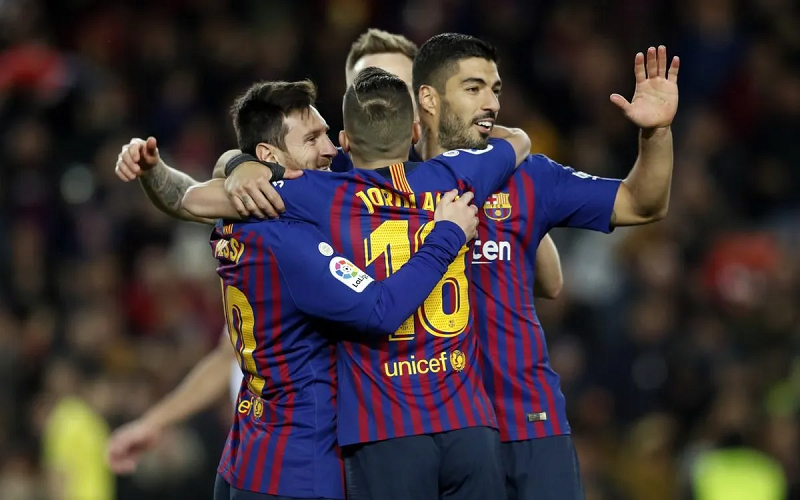
| Barcelona | 27% | 0.36 | Possession fatigue exploitation |
| Villarreal | 25% | 0.34 | High substitution impact |
| Valencia | 24% | 0.31 | Pace-heavy counterplay |
This late-scoring concentration confirmed controllable structural behavior rather than random momentum swings. Teams with large creative depth and pressing stamina repeatedly generated decisive actions post-75 minutes.
Tactical Drivers Behind the Late Scorers
The reasons for late goals reveal systems attuned to attrition. Managers engineered these outcomes intentionally—saving substitutions or designing shape changes to hit fatigued defenses.
Key Mechanisms of Late Output
- Bench utilization injected fresh pace against tired lines.
- Positional overloads widened spaces between compact low-block defenses.
- Adaptive shape shifts (4-3-3 to 3-4-3 variants) destabilized static midfield zones.
These mechanisms explain why dominant squads and well-conditioned mid-tier teams maintained scoring probability long after odds underestimated them.
Real-Time Betting Applications via UFABET Analysis
Tracking live triggers provides measurable entry points. On analytical systems embedded in ยูฟ่า168, bettors observed performance curves reflecting late-scoring potential through metrics like upticks in possession recovery rate and territory control after minute 70. When these variables aligned—especially for teams whose seasonal trend supported late efficiency—bettors entered over 1.5 live lines or “goal after 75’” specials during stabilized odds. Using structured data rather than intuition shifted wagering from speculation to probability timing.
Risk Conditions: When Late Bets Lose Predictive Clarity
Despite strong historical patterns, not all endgame volatility sustains across contexts. Congested fixtures, substitutions aimed at protection rather than offense, or scorelines already secured flatten late-game output. During midweek phases of 2018/2019, Real Madrid’s reduced stamina dropped their final-quarter scoring occurrence by nearly 20%. The principle becomes clear: context always outweighs statistics when energy or motivation declines.
Comparing Emotional Comebacks and Tactical Patience
Momentum Versus Management
- Emotional comebacks (e.g., Villarreal’s derbies) exhibited unstructured chaos—high variance, unpredictable outcomes.
- Managed late control (e.g., Barcelona’s sustained possession under Valverde) generated lower risk, higher consistency.
Bettors distinguishing between these archetypes prevented overextending on “script-following” narratives where probability had already equalized.
Applying casino online Probability Theory to In-Play Contexts
In structured gaming environments built on mathematical expectation—paralleling casino online probability models—each iteration’s edge rests in marginal opportunity exploitation. Late-goal betting follows the same formula: spot undervalued probabilities compounded across matches. Rather than chasing excitement, disciplined bettors applied variance control by limiting exposure to data-qualified scenarios only—where fatigue gradients and substitution effectiveness statistically aligned. This strategic repetition transforms chaos into calculated frequency.
Recognizing Situational Indicators During Live Play
Late-goal consistency wasn’t random but observable through key in-play cues:
- Ball possession over 65% beyond the 75th minute.
- Increased shot frequency between minutes 70–80.
- High expected goals delta favoring trailing teams.
Monitoring these indicators while odds still reflected static assumptions gave bettors a five-to-ten-minute reaction window—where line gaps reached peak profitability before bookmaker algorithms recalibrated.
Summary
In La Liga’s 2018/2019 season, tactical endurance defined late productivity. Teams such as Real Madrid, Sevilla, and Barcelona routinely converted closing pressure into decisive goals, turning stoppage time into calculated probability, not coincidence. Armed with real-time models from UFABET and probability alignment principles mirrored in casino online systems, bettors learned that the final 15 minutes reward logic, not adrenaline. The winning edge belonged to those patient enough to wait until fatigue turned into mathematics.